
 Branches & agencies



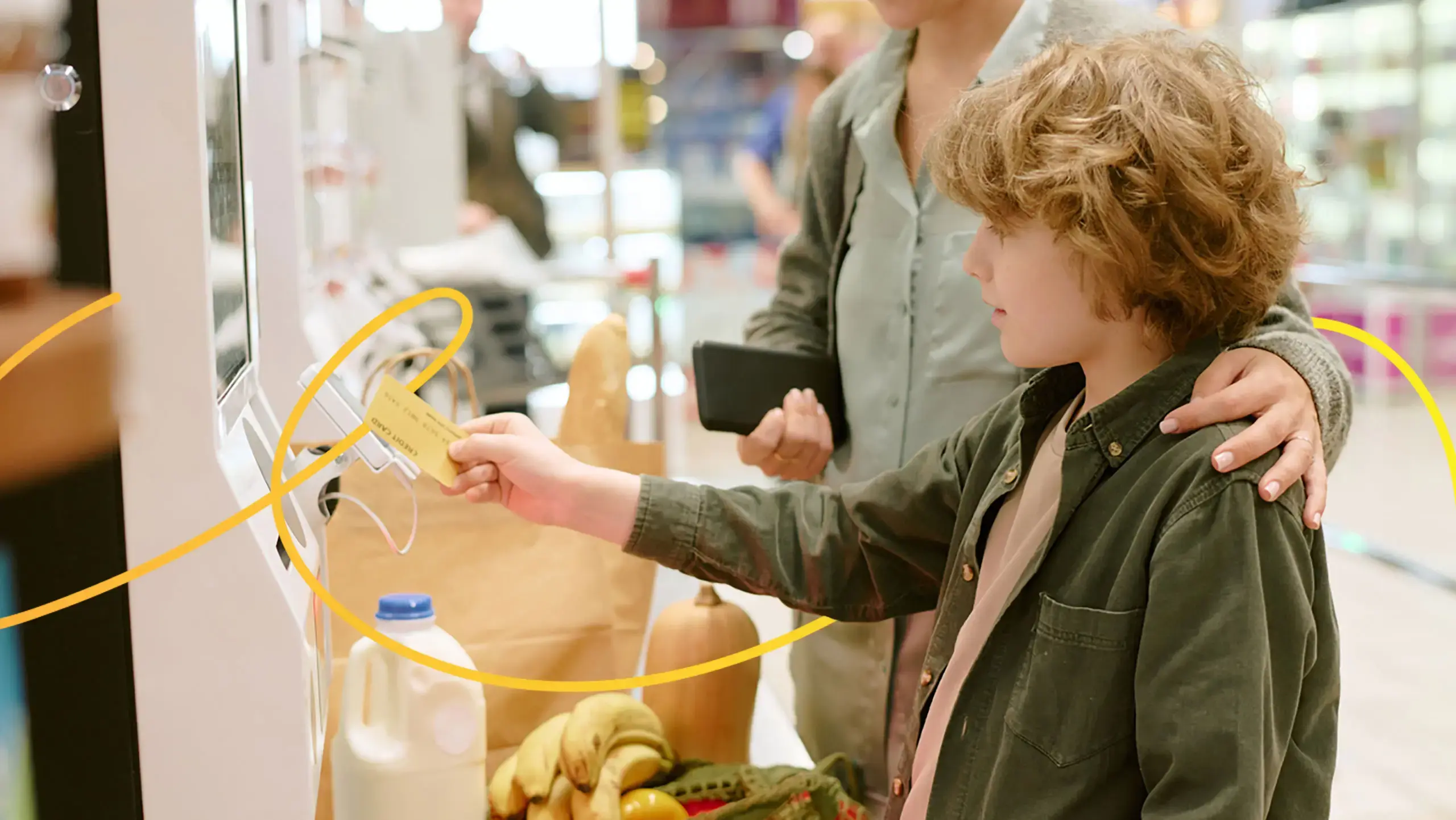
If you’re wondering how to teach kids about money, you’re not alone. Many experts agree that the earlier you start, the better. MoneyHelper suggests introducing money conversations from as young as three years old, with financial habits beginning to form by the age of seven.
While financial education does form part of the school curriculum, research from the Money and Pensions Service found that fewer than half of young people aged 7 to 17 receive a meaningful financial education at home or at school.
In this article, we’ll share practical tips on how to teach kids about money, explain age-appropriate money concepts, point you towards trusted resources, and show how our friendly branch teams can help bring saving to life through our children’s savings accounts and face-to-face services.
Earning, saving and spending
The three pillars of money management form the foundational loop for financial independence, and they include:
- Earning: Learning that money is earned and understanding the effort that goes into making it, it is not simply available from a bank card.
- Saving: Making informed, intentional choices about how money is used and learning to manage a limited amount responsibly.
- Spending: Putting money aside for future plans and goals, rather than spending it immediately, helping to build patience.
By learning this simple three-part cycle, children can begin to understand the basics of money management and develop positive financial habits from an early age. These foundations can help them make informed financial decisions in adulthood, manage spending effectively, and feel more confident about reaching their financial goals.
How to explain saving money to a child
Understanding how to explain saving money to a child can be challenging, so here are some of our top tips.
- Needs vs Wants: Help children understand the difference between essentials, such as food, clothing and a safe place to live, and non-essential items, such as toys, games or treats. This can help them make informed choices and understand how to prioritise.
- Visualisation: Children often learn best when they can see something for themselves. Using separate jars for ‘earning’, saving and spending can help them understand that any money they receive, whether from pocket money, gifts or helping with jobs around the home, can only be used once. Seeing money divided between different jars can also help them understand the benefits of setting some aside for later while still having some available to spend.
- Practical learning: Give children opportunities to get involved in everyday money activities. This could include choosing how to use their own money, as well as helping to work out simple costs when shopping, or handing money to the cashier. Seeing money used in real-life situations can help build confidence and reinforce the basics.
Age-by-age guide
When it comes to learning how to teach kids about money, it is important to ensure you tailor your strategies to their specific age group. Here is a breakdown of financial educational milestones by age group.
| Age Range | Core Money Lesson | Method |
| 3-5 | Money represents value and choices | 3 clear jars, physical coins, and playing shop |
| 6-8 | Earning money and the benefits of saving | Pocket money for jobs, shopping price comparisons and handing money to a cashier. |
| 9-12 | Digital money and budgeting basics | Show them how to pay bills, checking receipts and statements.Basic budgeting and paying for things themselves – for example, some schools have cards which you load with money. Explain how that works.Online payments – using gift cards and vouchers.Mobile phone credit |
| 13-18 | Savings, interest, fraud safety, credit basics and playslips | Teen bank accounts, interest calculators, scam awareness.Chat about credit cards and your own experiences. Explain how you are charged interest and how you get a credit rating.As they get older, they may have a part-time job. Talk through their payslip, including what is being paid and deductions for tax etc. |
Practical exercises to help teach kids about money
Family supermarket challenge: Give your child a £10 budget to buy ingredients for a family dinner.
Half-and-half matching scheme: For long-term savings goals, match your child’s contributions every month.
Home restaurant: Create prices for their favourite snacks and allow them to buy treats or save their budget for a bigger treat later.
Board games: Monopoly, Junio and The Game of Life are great ways to teach the basics of holding cash, spending and saving for larger purchases.

How to talk to kids about digital money
In an increasingly cashless world, modern financial literacy must include learning how to navigate digital spending. From in-app purchases to social media influencer trends, impulse purchases are becoming increasingly common.
- In-app purchases: Apps and games commonly gamify real money, and therefore it is important kids learn that gaming currency is equal to real-life money and it needs to be earned the same way. It is also easily purchased, and therefore parents should ensure safety measures are in place to avoid accidental spending.
- Social media spending: The rise of TikTok Shop and viral trends has also led to a rise in impulse purchases. By enforcing the strategy of saving and delayed gratification, kids will understand they don’t need to participate in every viral trend they see.
As digital spending becomes more prominent, it is vital that parents have safety measures in place, such as app controls, spending caps, and real-time notifications, to protect their children whilst teaching them about money.
Lead by example: your kids are watching
Knowing that money habits are largely set by age 7 shows just how important it is to lead by example. It might not seem like it, but children are incredibly influenced by their parents and surroundings. Encourage healthy financial discussions at the dinner table and allow your children to hear about your holiday budget or Christmas budgets to help them understand that things need to be earned and saved for.
How Hinckley and Rugby Building Society can help you
At Hinckley & Rugby Building Society, children can experience saving first-hand through face-to-face interactions with our branch teams. Whether it’s opening their first children’s savings account, making a deposit, withdrawing money or updating their passbook, these real-life experiences can help them develop a better understanding of how money works and build confidence in managing it.
Their passbook provides a physical record of all account activity, including payments in and out, interest earned and their running balance, making it easier to visualise how their savings can grow and change over time.
Children’s Regular Saver
Our children’s regular saver account is suitable for those who are looking to open a savings account on behalf of a child or for young people between the ages of 13 and 17 who would like to operate the account themselves. Interest is earned annually, and you can contribute up to £250 per calendar month. The idea behind this account is that you set a long-term goal, and the child can then access their money at 18. However, if you decide you want to access funds before this time, you can close the account without any notice or penalty.
Young Saver
Our young saver account is also suitable for those who are looking to open a savings account on behalf of a child or for young people between the ages of 13 and 17 who wish to operate the account themselves. Interest is earned annually, and you can contribute a maximum of £10,000. Withdrawals on this account are allowed without notice or penalty. This account is ideal for giving young people practical, hands-on experience of managing and saving money, while helping their savings grow through interest. It is also a flexible option for parents, guardians and relatives looking for an accessible way to save for a young person.
Customer review: “I opened two savings accounts for my children. I love that I can still take them into a physical branch. It allows my children to appreciate actual money, rather than just online banking and transactions. The staff are brilliant with them and have been for a number of years. This experience has helped inspire my kids to save and understand the value of money and how it works.”
How to teach kids about money starts with building awareness and good financial habits from an early age. Understanding how to explain saving money to a child through visual examples and practical activities, such as chores and games, can help bring key financial concepts to life and show how earning, saving and spending work together. These early lessons can help children develop a strong understanding of the basics, giving them the confidence to make informed financial decisions as they grow.


